

 Facebook
 X
X
 Pinterest
 Copy Link
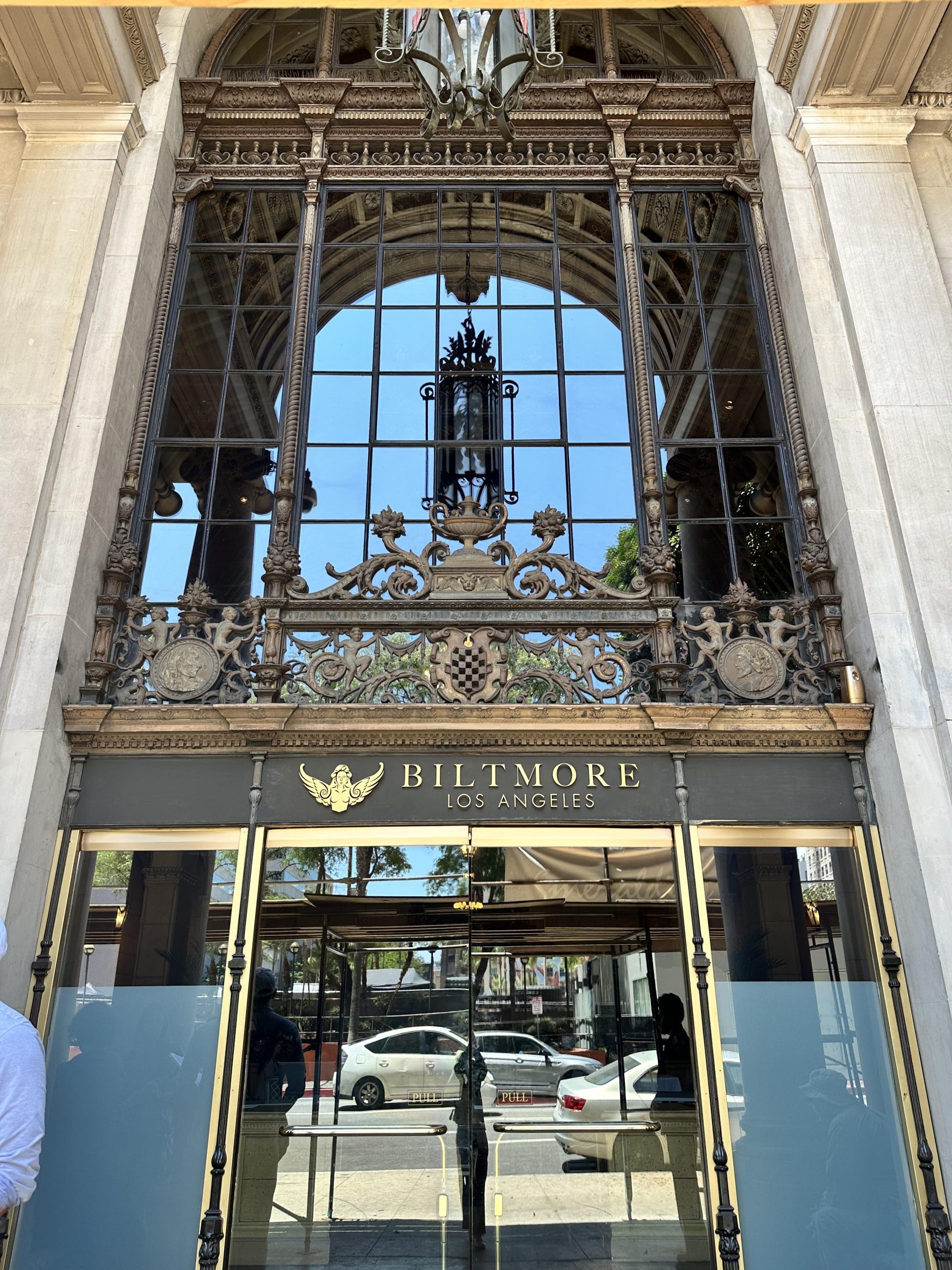
Nestled across from Pershing Square in the heart of Downtown Los Angeles, the Biltmore Los Angeles is more than just a hotel. In fact, it is a cornerstone of the city’s architectural heritage and a living piece of Hollywood history. Opened in 1923, this grand landmark has not only witnessed but also hosted many defining moments in Los Angeles’ cultural evolution.
To begin with, when the Biltmore opened its doors on October 1, 1923, it immediately set a new standard for West Coast luxury. At the time, it was the largest hotel west of Chicago. As a result, it symbolized Los Angeles’ emergence as a major American metropolis.[academymuseum.org]
Architectural Elegance Inspired by Europe
Notably, the Biltmore was designed by renowned architects Schultze & Weaver. As such, it reflects a striking blend of Beaux Arts and Renaissance Revival architecture, inspired by grand European palaces. [laconservancy.org]
Once inside, you can immediately appreciate its craftsmanship. For example, you’ll find:
- Intricate frescoed ceilings painted by Italian artist Giovanni Smeraldi
- Marble columns, crystal chandeliers, and rich gold accents
- Lavish ballrooms showcasing Baroque, Moorish, and Neoclassical influences
Moreover, even today, the hotel’s opulent interiors—such as the iconic Crystal Ballroom and Rendezvous Court—continue to capture the elegance of a bygone era.
A Central Stage for Hollywood History
Equally important, the Biltmore has long been tied to the entertainment industry. In fact, few properties share such a deep connection to Hollywood history.
For instance:
- The hotel hosted the Academy Awards eight times between 1932 and 1942, helping shape the global event we know today
- In addition, the Academy of Motion Picture Arts and Sciences was founded there in 1927 during a luncheon
- Furthermore, its grand interiors have appeared in countless films, television shows, and music videos
Consequently, the Biltmore became a gathering place for industry leaders. From Old Hollywood icons to modern celebrities, it has consistently attracted the biggest names in entertainment.
Prohibition, Politics, and Cultural Moments
Beyond Hollywood, the Biltmore has also played a role in broader cultural history.
For example:
- During Prohibition, its Gold Room operated as a hidden speakeasy, complete with secret passageways. [academymuseum.org]
- Later, in 1960, it hosted events tied to the Democratic National Convention, where John F. Kennedy was nominated for president. [historichotels.org]
- Over time, the hotel has also been part of important social and cultural movements throughout Los Angeles
As a result, the Biltmore’s significance extends far beyond hospitality.
Why the Biltmore Still Matters Today
Today, the Biltmore continues to offer Pasadena and greater Los Angeles residents a tangible connection to the region’s past. In particular, it reflects the early days of Hollywood and the city’s rise to global prominence.
Whether you’re attending an event, enjoying afternoon tea, or simply stepping into the lobby, the experience feels immersive. In many ways, visiting the Biltmore is like stepping into a living museum of Los Angeles luxury.
Ultimately, the Biltmore Los Angeles stands as a powerful reminder that great architecture and rich history never go out of style. Even nearly a century later, it remains one of the city’s most iconic landmarks—where elegance, culture, and storytelling continue to intersect.
